You’re about to head off on an amazing adventure. Your itinerary is planned, your suitcase is packed, and your camera battery is fully charged. But how are you going to remember all those little moments that don’t show up in your photos?
That’s where a travel journal comes in.
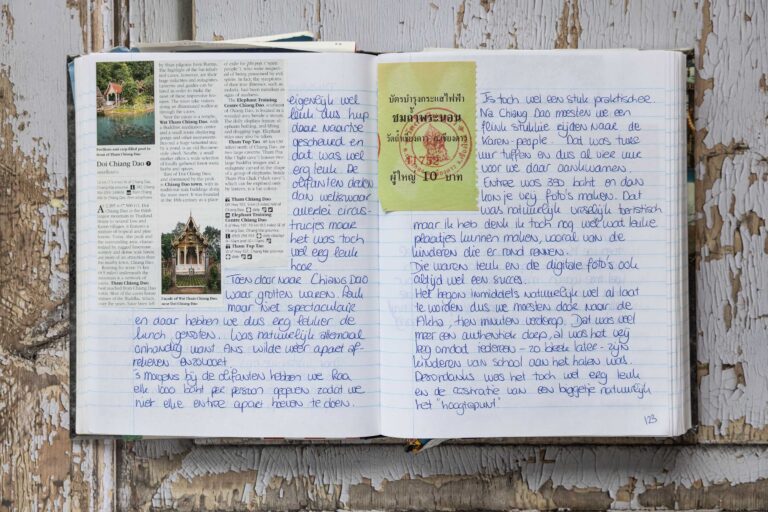
Whether you call it a travel journal, travel diary, or adventure notebook, keeping one is one of the best ways to preserve your memories long after you’ve returned home. The best part? There are no rules. Your journal can be as simple or as creative as you want it to be.
In this guide I’ll share how I started keeping travel journals, what supplies I use today, and how you can create a journal that becomes one of your most treasured souvenirs.
Why Keep a Travel Journal?
First things first: you don’t have to keep a travel journal.
The goal isn’t to create a work of art or something worthy of social media. It’s simply a place to capture memories that might otherwise fade over time.
Maybe you only write a few sentences every evening. Maybe you fill pages with sketches, tickets, watercolor paintings, or pressed flowers. Maybe you journal every day, or only when something memorable happens.
There is no right or wrong way.
I’ve been keeping travel journals for as long as I can remember. I have shelves full of them, and every now and then I still pull one down and spend an evening reliving a trip through my own handwritten notes.

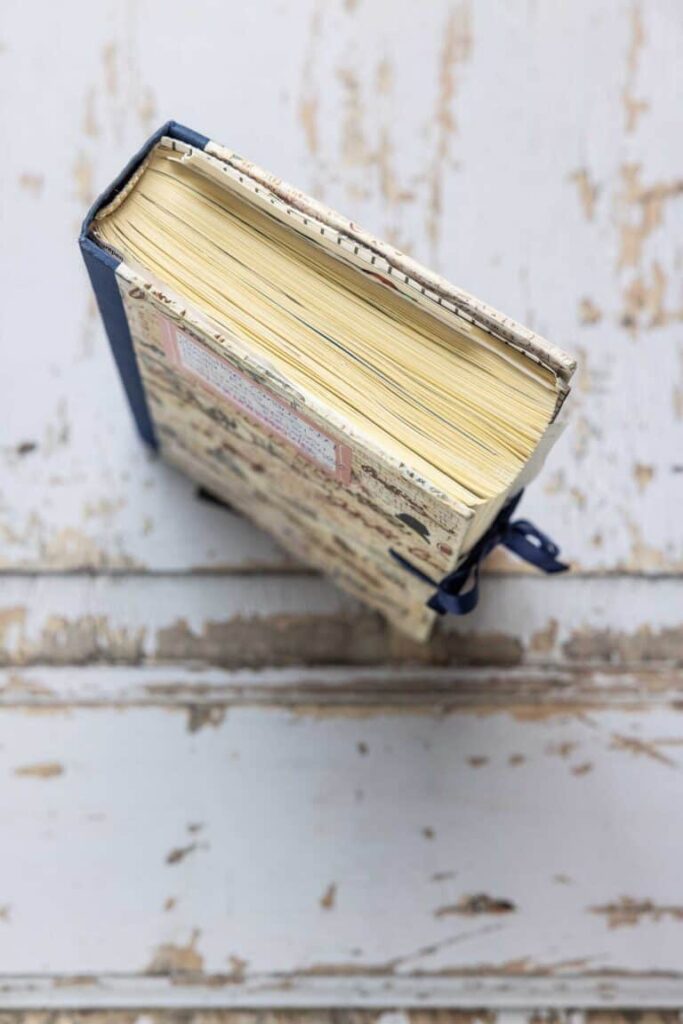
In fact, those journals are exactly where the name Scribbles & Notes comes from.
When I first started, I simply used an inexpensive notebook. It didn’t take long to discover that cheap notebooks and long trips don’t always go well together.
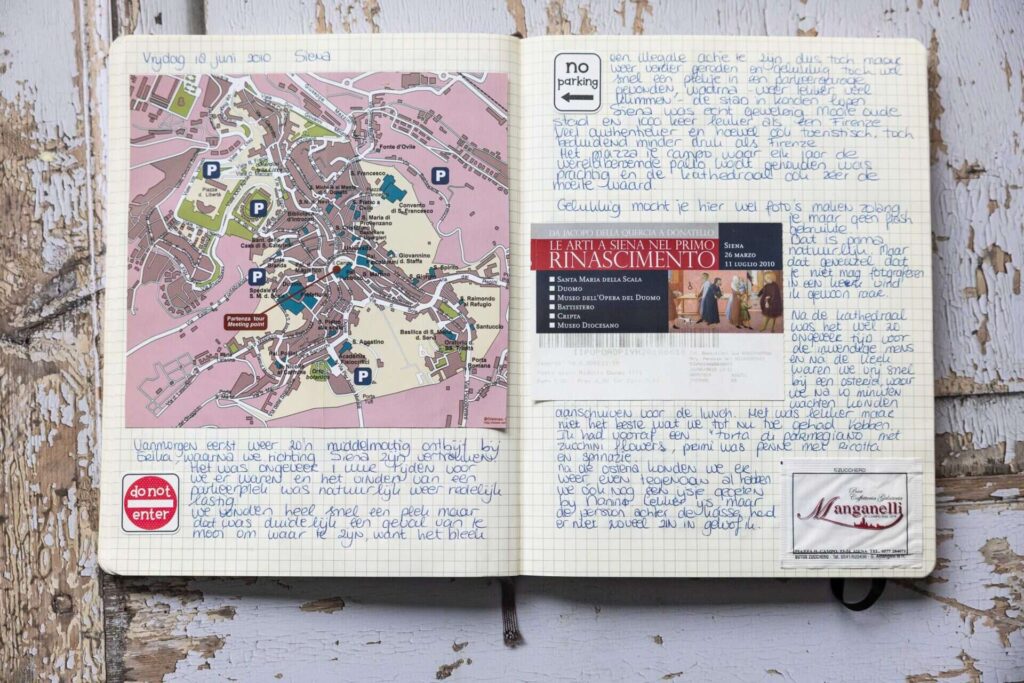
Once you begin adding museum tickets, maps, receipts, postcards, business cards, pressed leaves, and photographs, a thin notebook quickly turns into a very chunky one. A sturdy notebook will hold up much better.
Choosing the Right Notebook
One of the first decisions you’ll make is choosing the notebook you’ll actually use.
There isn’t one perfect option, but there are a few things worth considering.
Size
If you’re backpacking or traveling light, you’ll probably appreciate something compact.
Pocket-sized notebooks or Traveler’s Notebook Passport inserts are perfect if every ounce matters.
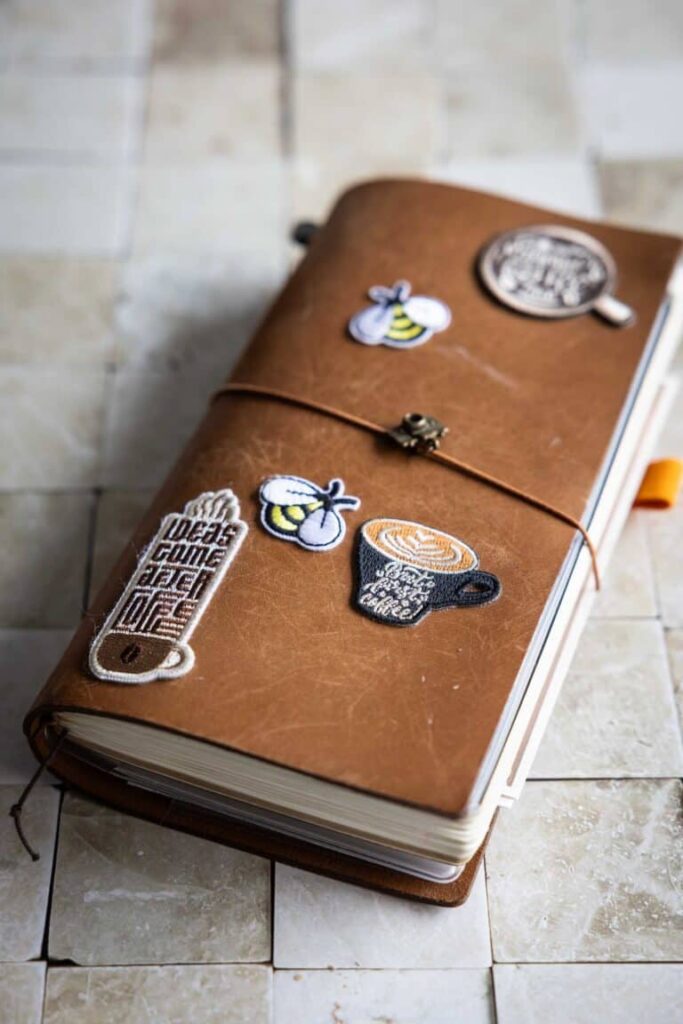
Personally, I usually carry a regular-sized Traveler’s Notebook. Over the years I’ve somehow collected several colors—including camel, blue, and red—and they all travel with me sooner or later.
Thickness
Do you want one notebook for every trip?
Or would you rather keep one journal for an entire year?
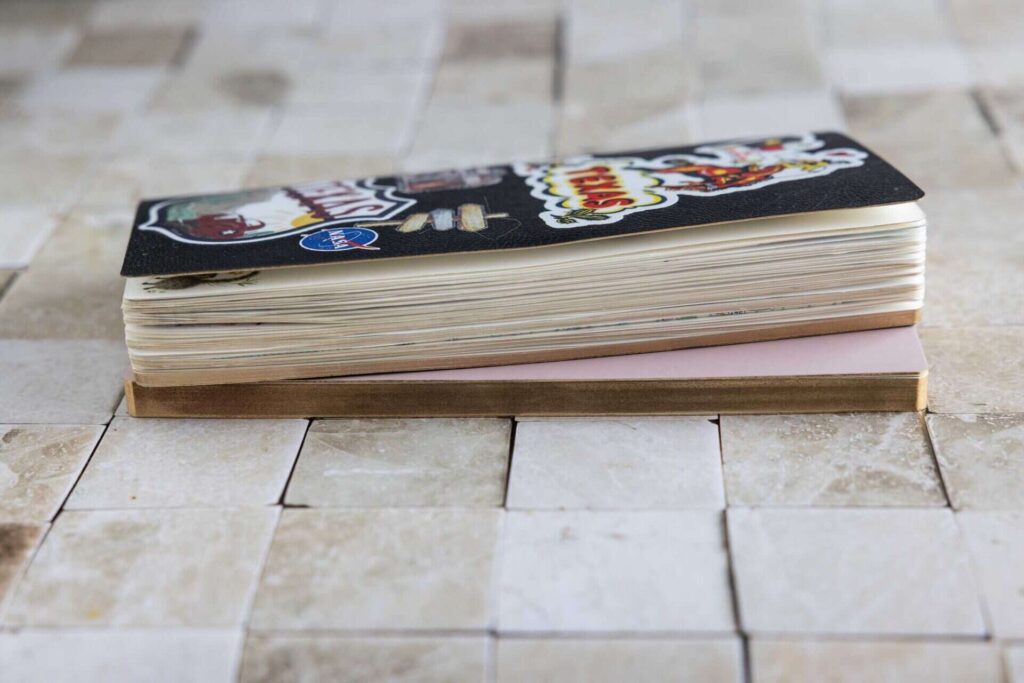
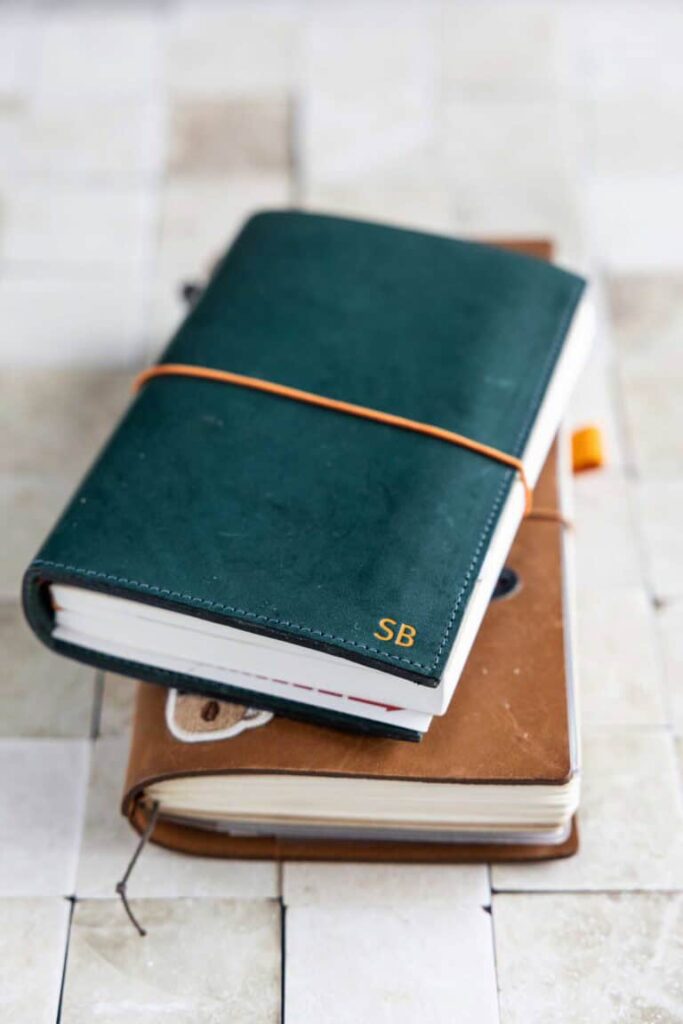
Remember that whatever notebook you choose will almost certainly end your trip much thicker than it started. Just as a reference; the photo above is of the same notebook. The top ones is filled with memories, the bottom one still empty. See the difference?
Paper Quality
Paper matters more than people often realize.
Before your trip, spend some time testing your favorite pens on the paper you’ll be using.
My personal favorite is Tomoe River Paper. It’s incredibly thin but surprisingly resistant to ghosting and feathering, even with fountain pens. It has a wonderfully smooth writing surface that makes journaling feel like a pleasure instead of a chore.
Digital or Paper?
Of course, you don’t have to choose just one. I actually use both.
During every trip I use Polarsteps to automatically record my route. Along the way I add quick notes so I don’t forget funny moments or little details.
Later, when I have more time, I transfer many of those memories into my paper journal.
Another excellent option is Day One, which offers much more flexibility if you want a complete digital journal. Unlike Polarsteps, it’s designed more as a personal diary than as a travel tracker.
For me, the digital version is practical. The handwritten version is emotional. Both have their place.
What Do You Need to Start?
The good news? Not much.
At its most basic, all you really need is:
- A notebook
- A pen
That’s it.
Everything else is optional.
Of course, part of the fun is collecting little reminders of your trip:
- Museum tickets
- Train tickets
- Maps
- Coffee sleeves
- Business cards
- Receipts from memorable restaurants
- Local stamps
- Pressed flowers and leaves
- Small brochures
- Postcards
To attach those, I always pack a small glue roller or glue stick. A compact pair of scissors is useful too, although I usually have one with me anyway.
Pens I Love
For years I wrote almost exclusively with a simple Bic ballpoint pen.
Even today I still think they’re great.
Nowadays, though, I mostly journal with a fountain pen.
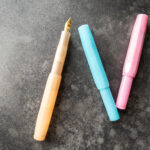
One of my favorites is the Kaweco Sport. It’s compact, affordable, and almost made for travel.
I also regularly use a Tombow markers for making headlines and a micron fineliners if I want to draw with waterproof liner.
Ultimately, the best pen is the one you enjoy writing with. And it really doesn’t have to be expensive at all!
Where to Buy Travel Journaling Supplies
People often ask where I buy my notebooks and journaling supplies.
The truth is, you don’t need anything fancy to get started.
That said, these are some of my personal favorites.
Traveler’s Notebooks
I’ve bought many of mine from 24PaperShop in the Netherlands, but if you’re in the United States you can also find Traveler’s Company products through many stationery retailers.
Fountain Pens
The Kaweco Sport remains one of my favorite beginner fountain pens.
It’s affordable, reliable, and small enough to fit inside almost any travel pouch.
Tomoe River Inserts
If you love fountain pens, notebooks with Tomoe River paper are hard to beat.
Sterling Ink makes excellent inserts, although there are now many other manufacturers available depending on where you live.
Paper Republic
Paper Republic creates beautiful leather journals that become even better with age.
I use several of them for work as well as for travel.
Stickers & Washi Tape
I have a slight weakness for stickers.
Actually…
More than a slight one.
Most of mine come from Etsy, The Washi Tape Shop, and small independent stationery artists whose designs make every journal feel a little more personal.
The Most Important Tip
Don’t wait until your journal looks “Pinterest perfect.”
Some of my favorite pages contain nothing more than a coffee stain, a train ticket, and three handwritten sentences.
Those simple pages often bring back memories far more vividly than perfectly designed layouts ever could.
Your travel journal isn’t meant to impress anyone else.
It’s meant to bring you back to the places you’ve loved.
FAQ Starting a Travel Journal
A travel journal is a notebook where you record your travel experiences through writing, sketches, photographs, tickets, maps, or other keepsakes.
It helps preserve memories that photos alone often can’t capture. Reading an old journal years later is like taking the trip all over again.
Just a notebook and a pen. Everything else is optional.
Anything you want. A funny conversation, today’s weather, your favorite meal, a quick sketch, or simply where you spent the day.
Not at all. Some people write daily, others only when inspiration strikes. The important thing is to enjoy the process rather than feeling obligated to fill pages.
Next: Don’t miss my guide with 10 beginner-friendly travel journaling tips to help you fill your first notebook with confidence.