
From La Rochelle, it only takes a few minutes to reach Île de Ré via the long bridge connecting the island to the mainland. The relatively high toll (€8 in the low season and €16 in the high season) is actually an environmental tax used, among other things, to fund a team of ten full-time environmental wardens.
The island has strict regulations when it comes to protecting the environment and its unique ecosystem. Even building regulations are pretty strict: no high-rise buildings are allowed, and there is a palette of just 12 approved colors for painting shutters and other exterior woodwork. In fact, 80% of the island cannot be developed at all.
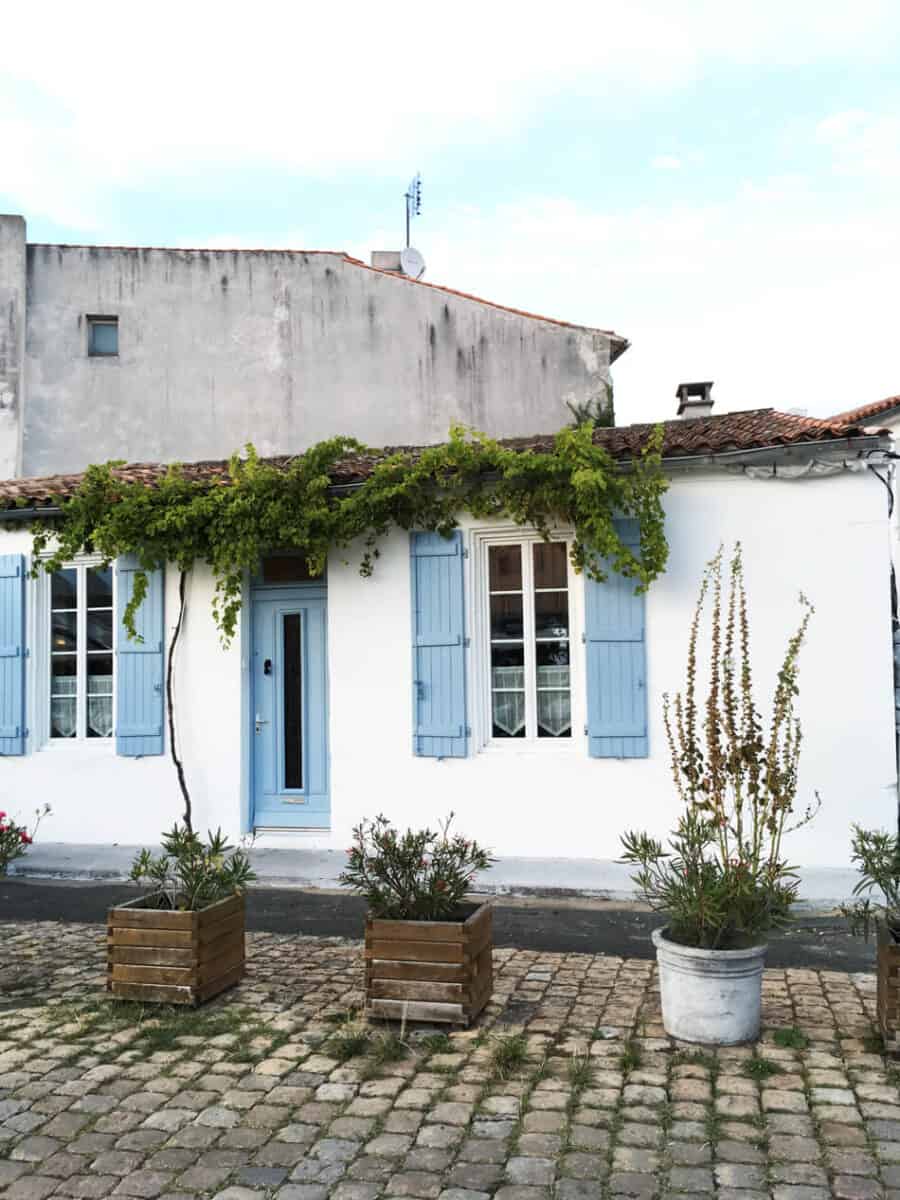
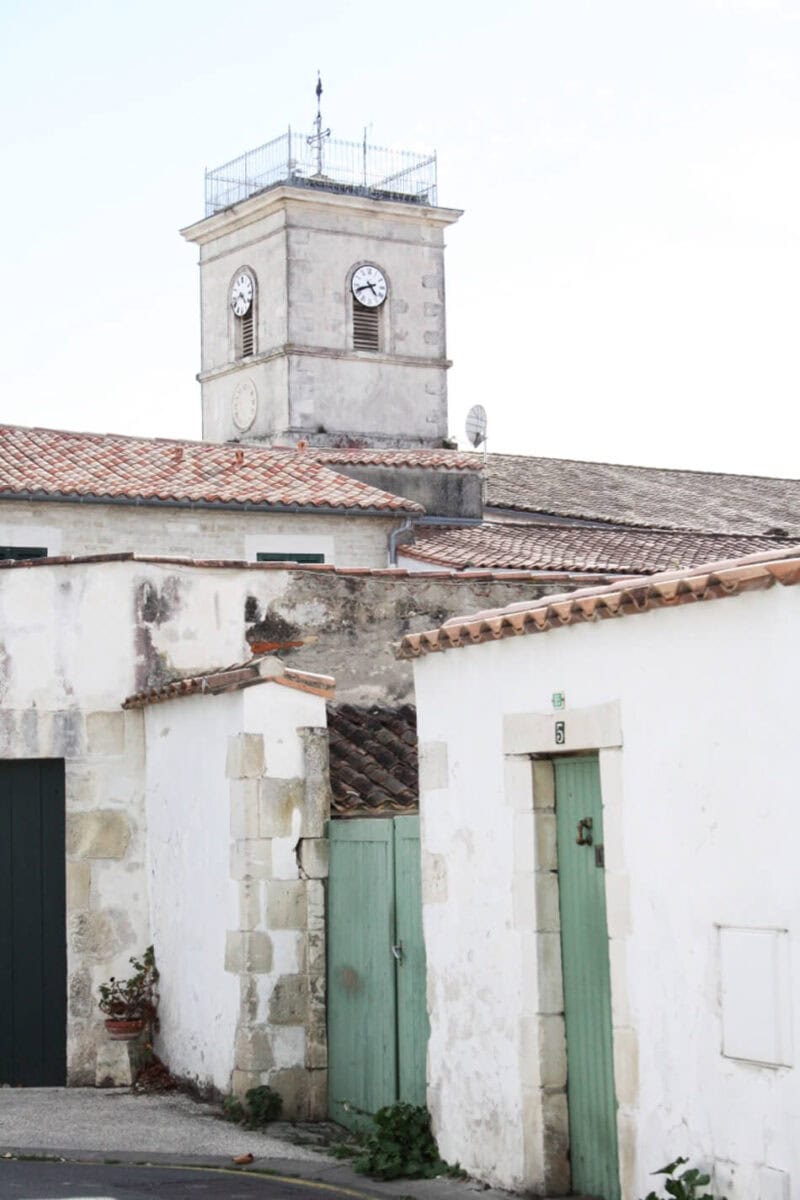
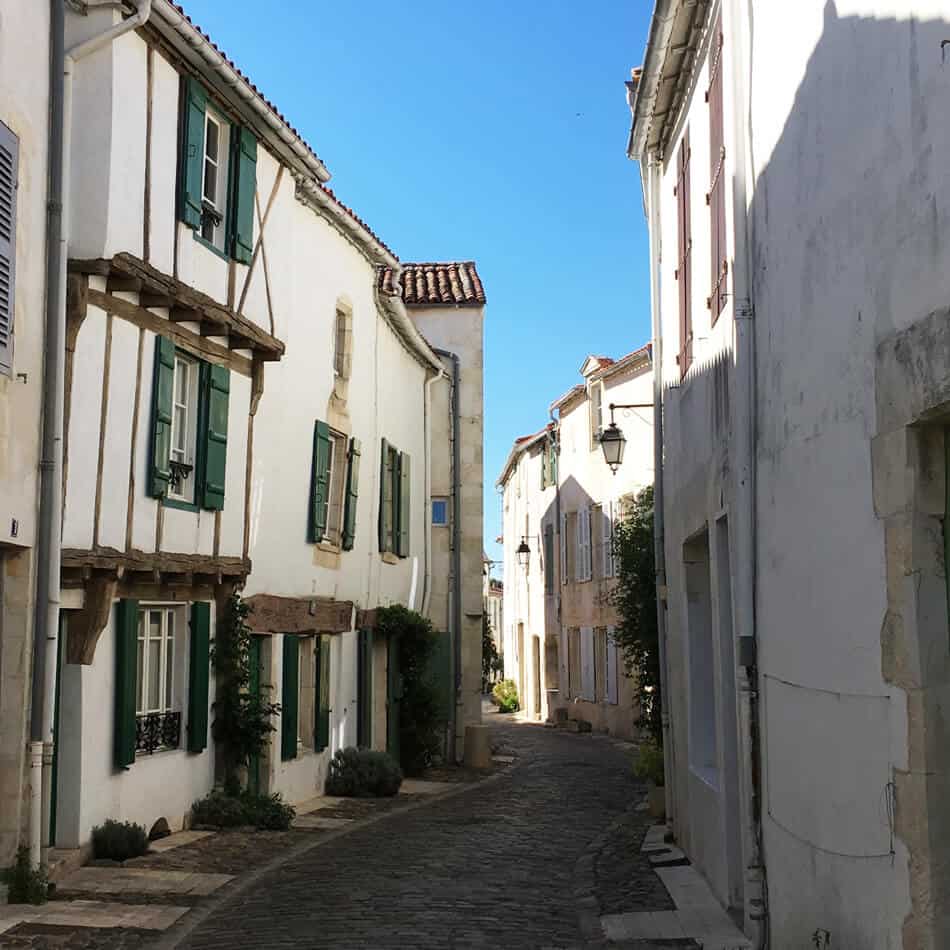
And all those rules have certainly paid off. The moment you cross the bridge, you immediately feel like you’re on vacation. There are charming villages filled with narrow, winding streets, whitewashed houses with pastel-colored shutters, plenty of nature, the ocean never far away, and, of course, lots of restaurants to choose from.
Table of contents
Ars-en-Ré
The main village in the northern part of the island is Ars-en-Ré. It’s considered one of the most beautiful villages in France and consists of a maze of narrow, winding streets. In the center you’ll find a small square with limited parking. Before entering Ars-en-Ré, however, you’ll pass a larger parking lot.
Tip: Leave your car there and walk the short distance into the village center. It’s much easier than trying to find a parking spot in the narrow streets.
One of the most recognizable features of Ars-en-Ré is its tall, pointed church spire. It’s a true landmark and can be seen from miles away.
Keep in mind that, as in the rest of the island, many stores and businesses close between noon and 3 p.m.
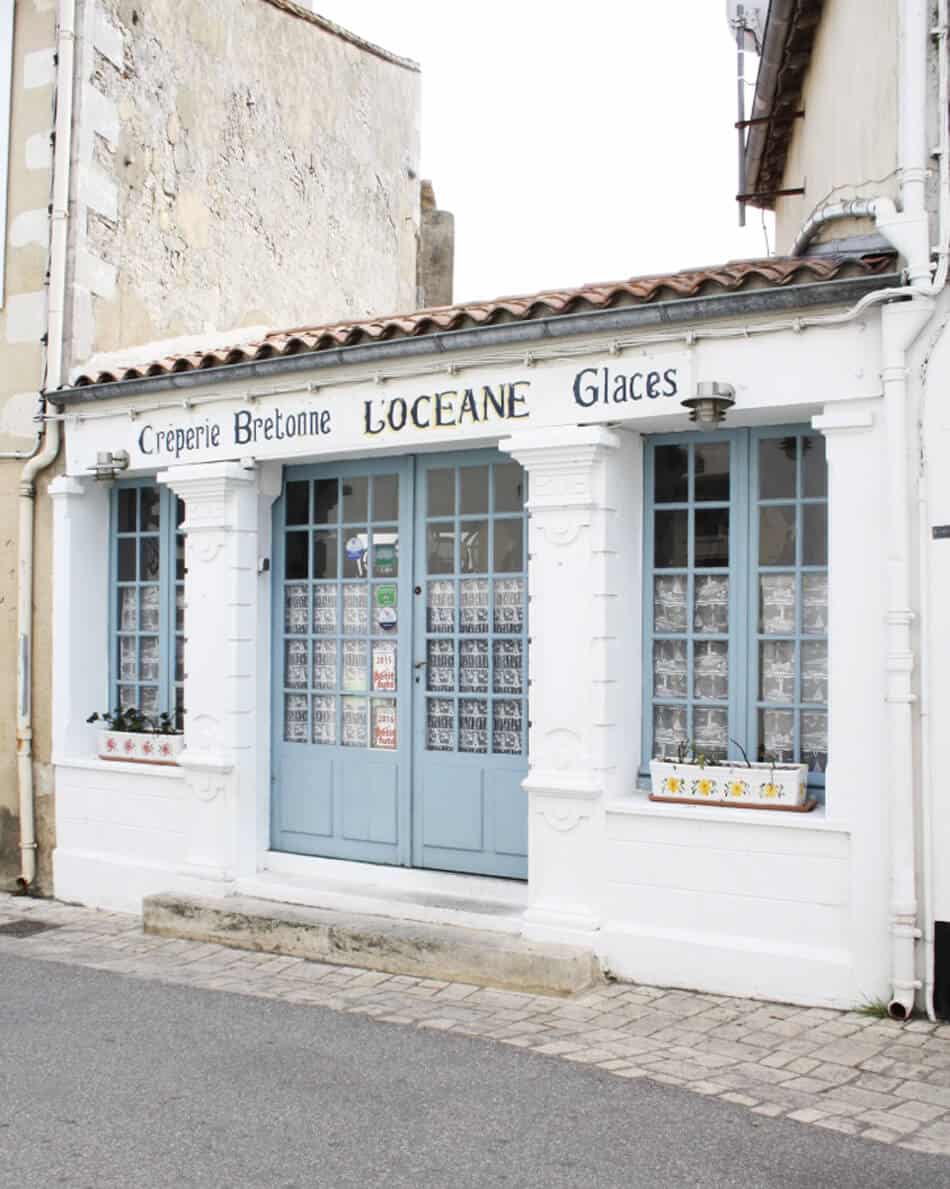
Restaurants are generally open during those hours. They tend to close around 3 p.m. and reopen at about 7 p.m. for dinner. You’ll find several restaurants and cafés around the church square, but just outside the center is Le Grenier à Sel (20 Rue de la Baie), which has a beautiful courtyard garden.
At 1 Chemin des Palissiats you’ll find Les Confitures du Clocher, a jam producer where the sheer number of jars and inventive flavor combinations is enough to make your jaw drop. They also produce fruit and herb jellies that dissolve in hot water to make herbal tea!
A Little History. Yes, We Really Need This Part.
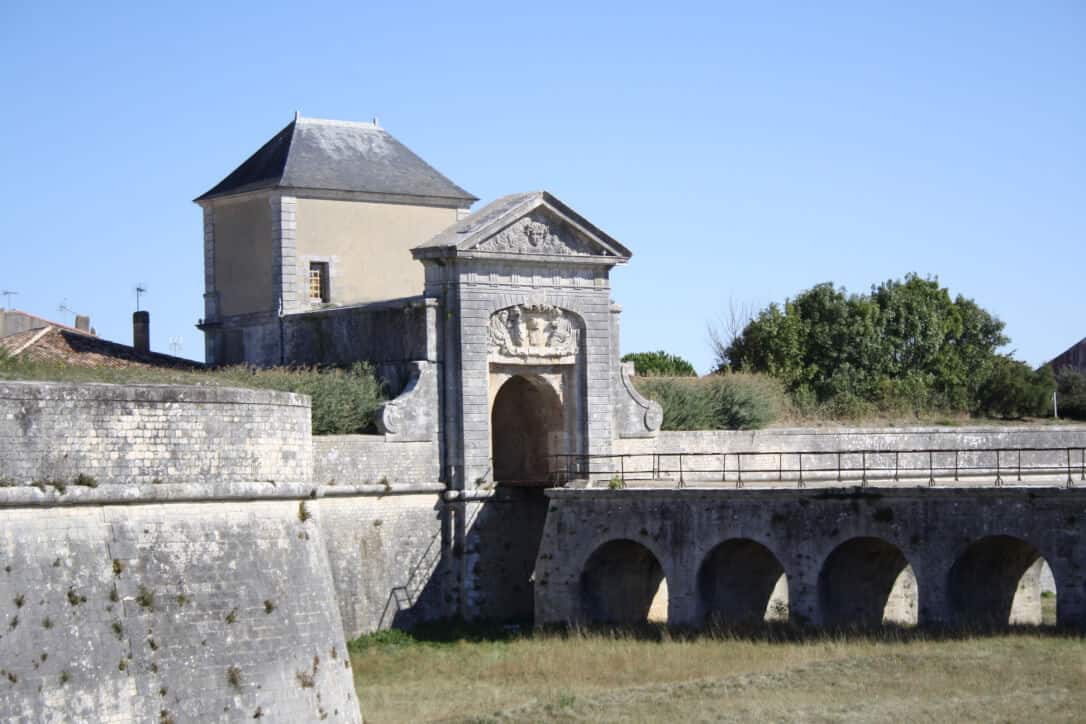
The oldest building on the island is the ruin of a 12th-century abbey. The monks who were among the first to make the crossing from the mainland discovered, while planting vineyards, that much of the island’s soil consisted of clay.
Clay absorbs very little water, which makes it ideal for extracting salt from seawater.
Salt the Way Salt Is Supposed to Be
And that’s exactly what people have been doing here for centuries. There are more than 90 salt producers on Île de Ré, and I visited Rivesaline to find out more.
The friendly owner, Cédric, showed me around a small section of his 35,000-square-meter property. Salt harvesting is highly dependent on the weather and generally takes place between June and October. Thanks to the extremely dry summer during my visit, I was lucky: there was still plenty to see.
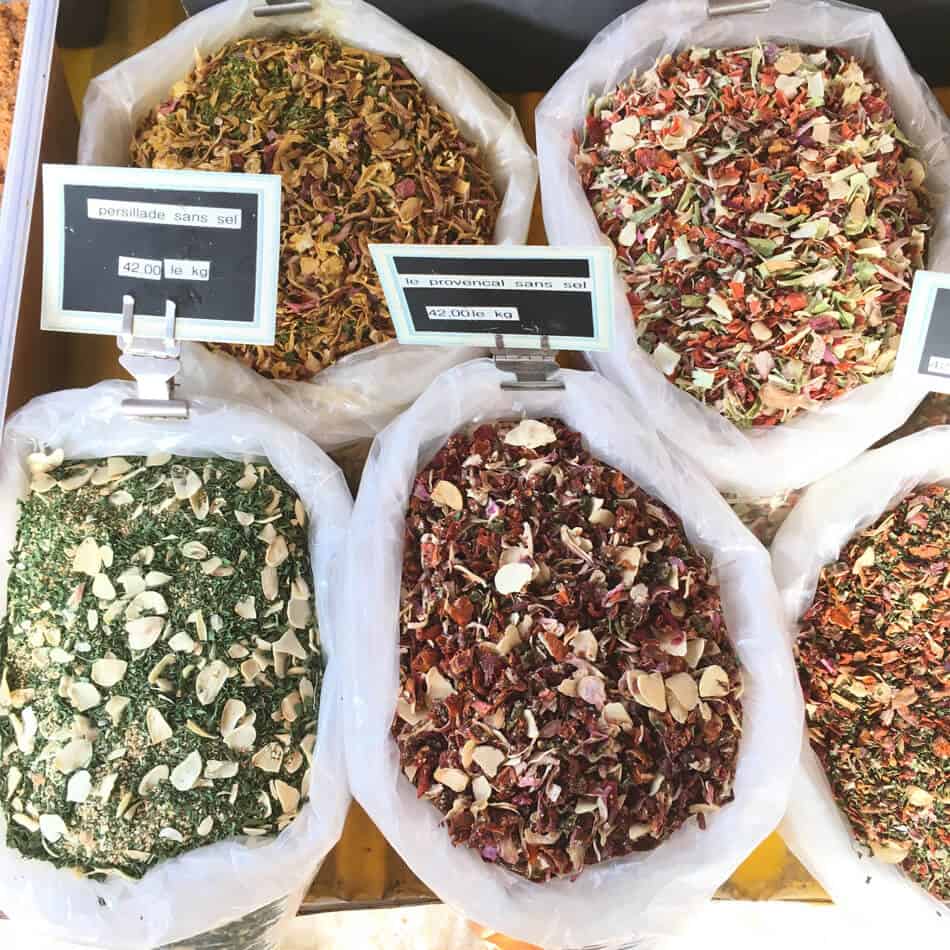
I’ll explain how the salt harvesting process works in a minute. Not interested in the technical details? The short version is that you need three things to produce sea salt: dry weather, tides, and clay soil. Feel free to skip ahead to the next section. 🙂
Rivesaline harvests its salt using traditional methods. Everything is done by hand with an ingenious system of ponds, channels, and pipes.
There are three types of basins. The first collect seawater at high tide, roughly every two weeks. From there, the water moves through a series of basins and dikes in a controlled system — first in, first out — before eventually reaching the salt pans, where the water evaporates and leaves the salt behind.
All of the basins are dug into clay soil, which absorbs very little of the saltwater. A manually operated network of pipes and gates directs the seawater from one basin to the next.
Once the water reaches the salt pans, it is left to evaporate. This produces two different kinds of salt: gray sea salt and fleur de sel.
Not All Salt Is Created Equal
The main difference between gray sea salt and fleur de sel is their structure. Fleur de sel crystals are extremely delicate, which means this salt is best used as a finishing salt rather than during cooking.
For cooking, gray sea salt is the better option. Fleur de sel loses its delicate texture when heated.
The regular white salt most of us know from the supermarket is generally produced on a much larger industrial scale and processed differently. It’s often slightly cheaper than traditionally harvested gray sea salt, but for me, the environmental benefits and the knowledge that I’m supporting traditional producers are more than enough reason to choose artisanal sea salt whenever possible.
And There’s More
Fortunately, Rivesaline has an online store and ships internationally. They were also preparing to start exporting to the UK, Germany, Belgium, the Netherlands, and Luxembourg.
And that’s good news because salt isn’t the only thing Rivesaline produces. They also grow sea lettuce, which they use to make a variety of delicious salt-based products. I’m a fan!
For Nature Lovers
The northern part of Île de Ré is definitely the place to be if you love nature.
You’ll find the Lilleau des Niges nature reserve, which is particularly interesting for birdwatchers, as well as extensive salt marshes and the forests of Combe à l’Eau and Lizay, which lead right onto the beach.
And the best way to get around the island? By bike.
There are excellent bike paths all over Île de Ré and plenty of places where you can rent a bicycle. Since parking in the narrow streets of the villages can be tricky, cycling is often the easiest option anyway.
Halfway Across the Island
Roughly halfway across Île de Ré you’ll find the lovely village of Le Bois-Plage-en-Ré.
Once again, expect white houses, pastel-colored shutters, narrow streets, little shops, and, of course, a boulangerie, pâtisserie, and ice cream shop.
But you’ll also find Hôtel L’Océan here, a little paradise within paradise.
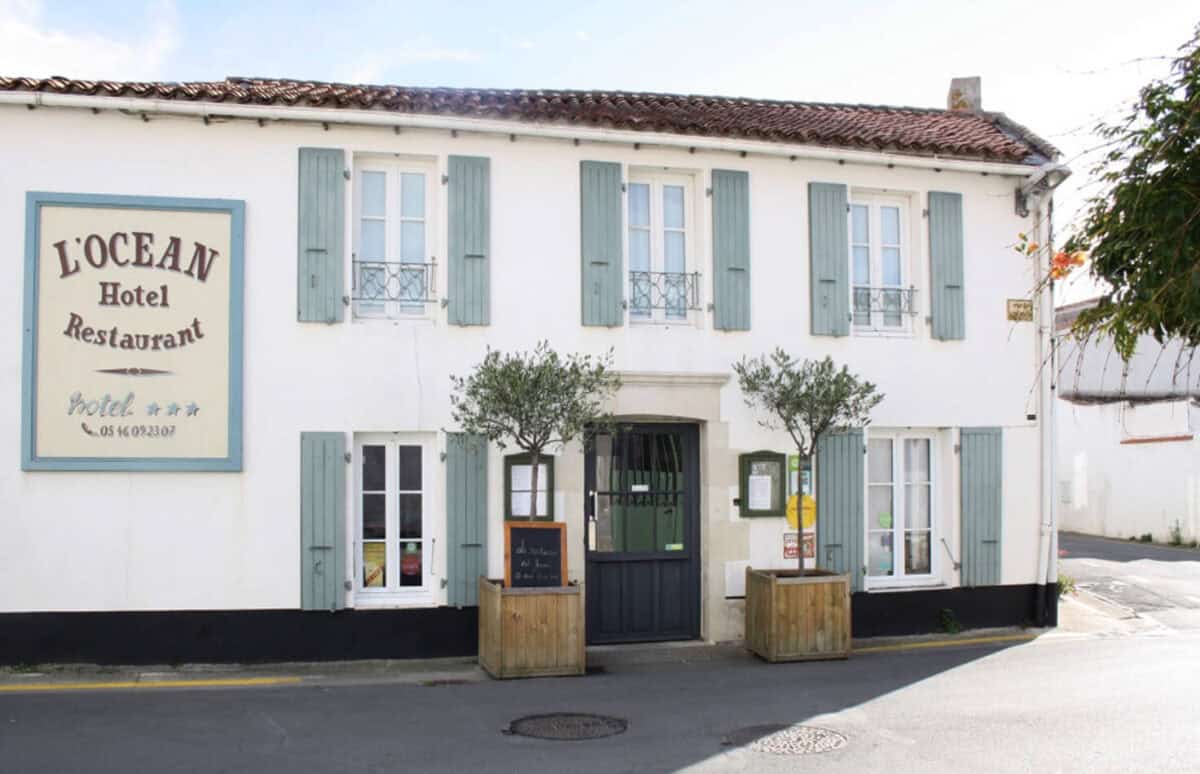
At first glance, its charming façade makes it look like a small and cozy hotel. But walk through the corridor past the dining room and you’ll arrive at a lovely terrace. Behind that is the real surprise: a beautiful courtyard garden surrounded by guest rooms, with a swimming pool and even more rooms beyond it.
It’s the perfect place to relax for a while after a busy day exploring the island.
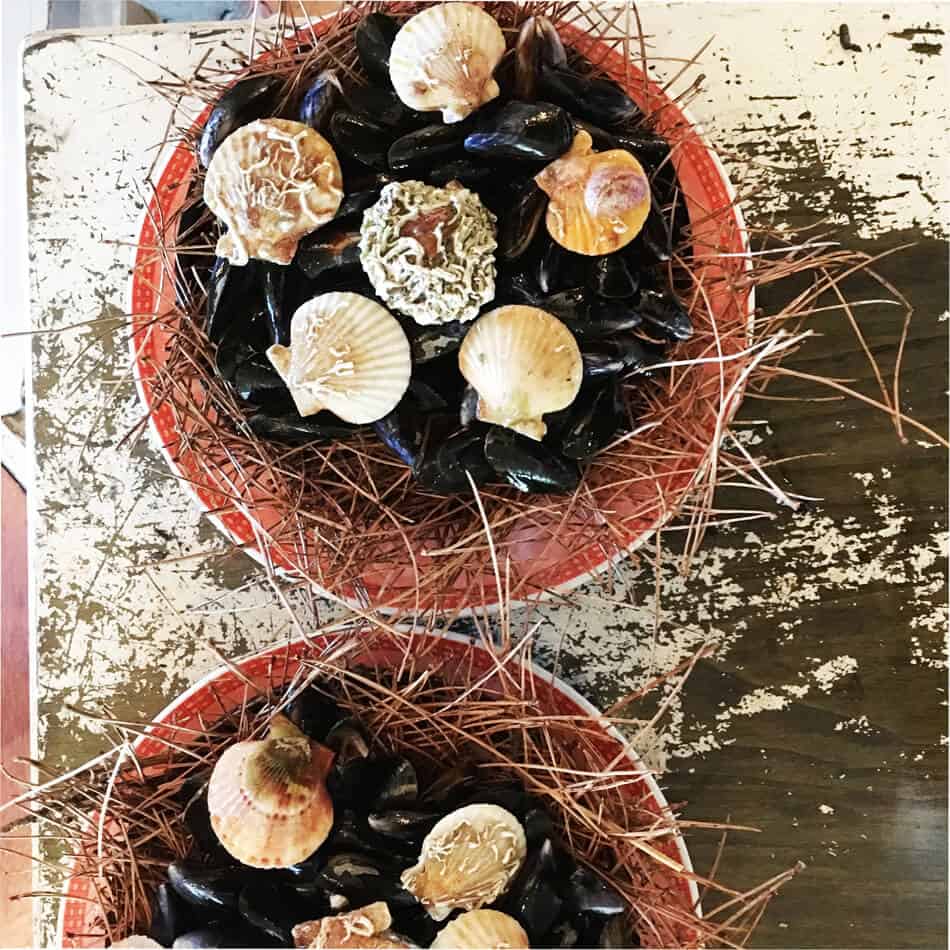
At restaurant L’Aile de Ré, they serve mussels and local shellfish prepared en éclade, a traditional local cooking method.
The shellfish are placed in a cast-iron pan filled with pine needles. The needles are set on fire and, with the lid in place, the pan is left over the open flames for around 15 minutes. The result is seafood with a wonderful smoky flavor.
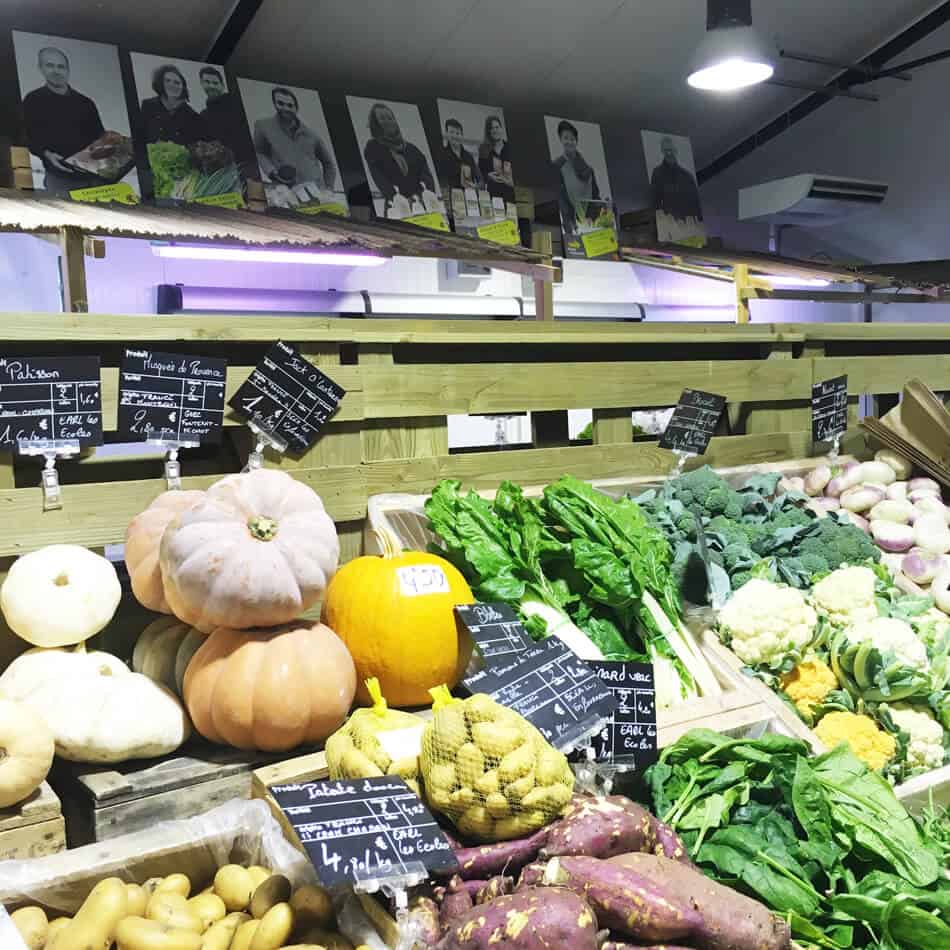
In Le Bois-Plage-en-Ré you’ll also find La Ferme des Producteurs, where several small local producers sell their regional products.
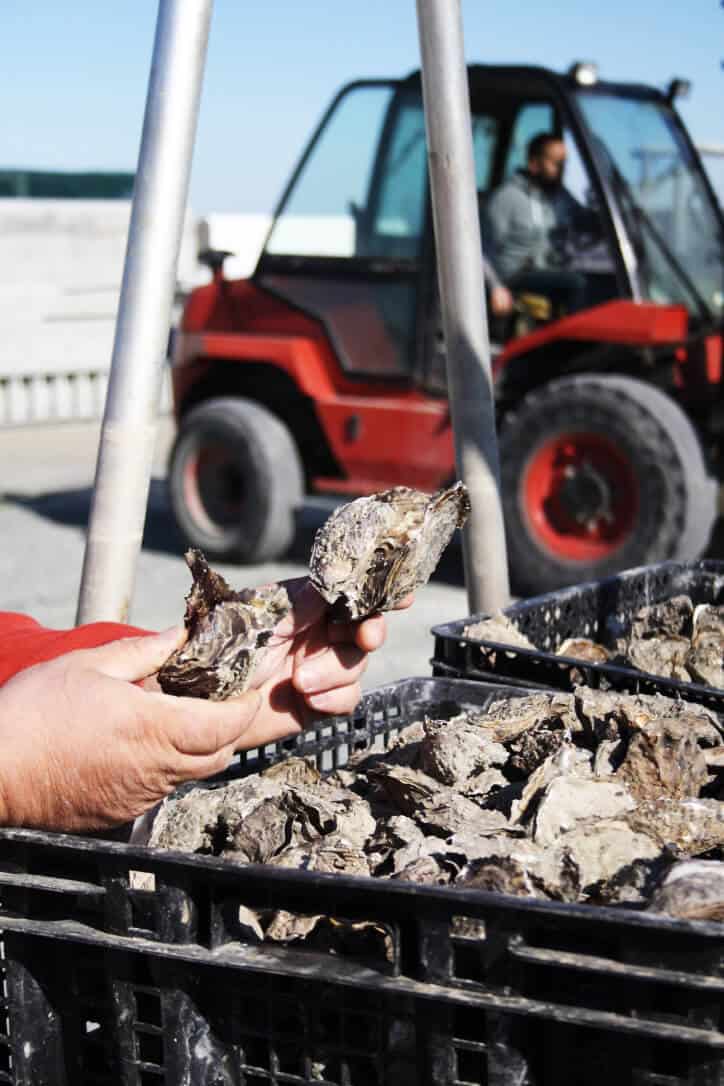
The store also serves as a meeting place. Recipes are exchanged, and the producers take turns working in the shop, so there’s usually someone there who can tell you all about how their products are made.
Check their Facebook page for current opening hours before you go.
Planning a Trip to Île de Ré?
Looking for somewhere to stay on Île de Ré? There are plenty of hotels, vacation rentals, and campsites across the island, but accommodations can fill up quickly during the summer months.
FAQ About Île de Ré
Île de Ré is located just off the west coast of France, near the city of La Rochelle. The island is connected to the mainland by a bridge that’s almost 2 miles (3 kilometers) long.
So there’s no need to worry about ferry schedules. Just cross the bridge and your island vacation begins.
Because it’s wonderfully relaxed. Think whitewashed houses with colorful shutters, narrow streets, salt marshes, miles of bike paths, and oysters that couldn’t be any fresher.
It has that wonderfully laid-back island feeling, but with plenty of French wine, cheese, seafood, and great restaurants thrown into the mix. What’s not to love?
By bike. Without a doubt.
There are more than 60 miles (100 kilometers) of bike paths on the island, and it sometimes feels as if everyone is cycling around with a baguette tucked under one arm like they’re auditioning for a French movie.
And really, cycling is the most enjoyable way to explore. Parking can be quite challenging during the high season, so leaving the car behind makes life much easier.
For a first visit, I’d recommend spending at least three to four days on the island.
That gives you enough time to explore several villages, enjoy some good food, go cycling, and spend an afternoon doing absolutely nothing on the beach.
Because that’s important too.
May, June, and September are wonderful months to visit. The weather is often already lovely, but you avoid the huge crowds of July and August.
The island is particularly popular with French vacationers during the summer. And if the French themselves flock somewhere for their vacations, you can usually assume the food is going to be good.
Yes… a little.
That’s especially true during the summer. Hotels, campsites, and restaurants aren’t necessarily budget-friendly.
But you do get plenty of atmosphere in return.
One way to save money is to rent an apartment with a kitchen and buy fresh ingredients at the local markets. A simple lunch of local cheese, fresh shrimp, good bread, and a cold glass of wine can taste like a Michelin-starred meal when you’re eating it on Île de Ré.
Oysters. Always oysters.
But there are plenty of other local specialties worth trying, including:
– Fresh mussels
– Sea salt harvested from the island’s salt marshes
– Salted caramel
– Pineau des Charentes, a regional fortified wine
– Fresh fish from the Atlantic Ocean
And don’t forget to find a restaurant where you can settle in with a big plateau de fruits de mer filled with fresh shellfish.
Cycle alongside the salt marshes, eat oysters at an oyster shack, browse the local markets, watch the sunset near the lighthouse, wander through the island’s small villages, and have a picnic on the beach.
And my personal favorite? Simply wandering around without a plan.
Île de Ré is surprisingly good for that.